Showing posts with label Quotations. Show all posts

Sunday, March 20, 2022

WORDS WORTH QUOTING


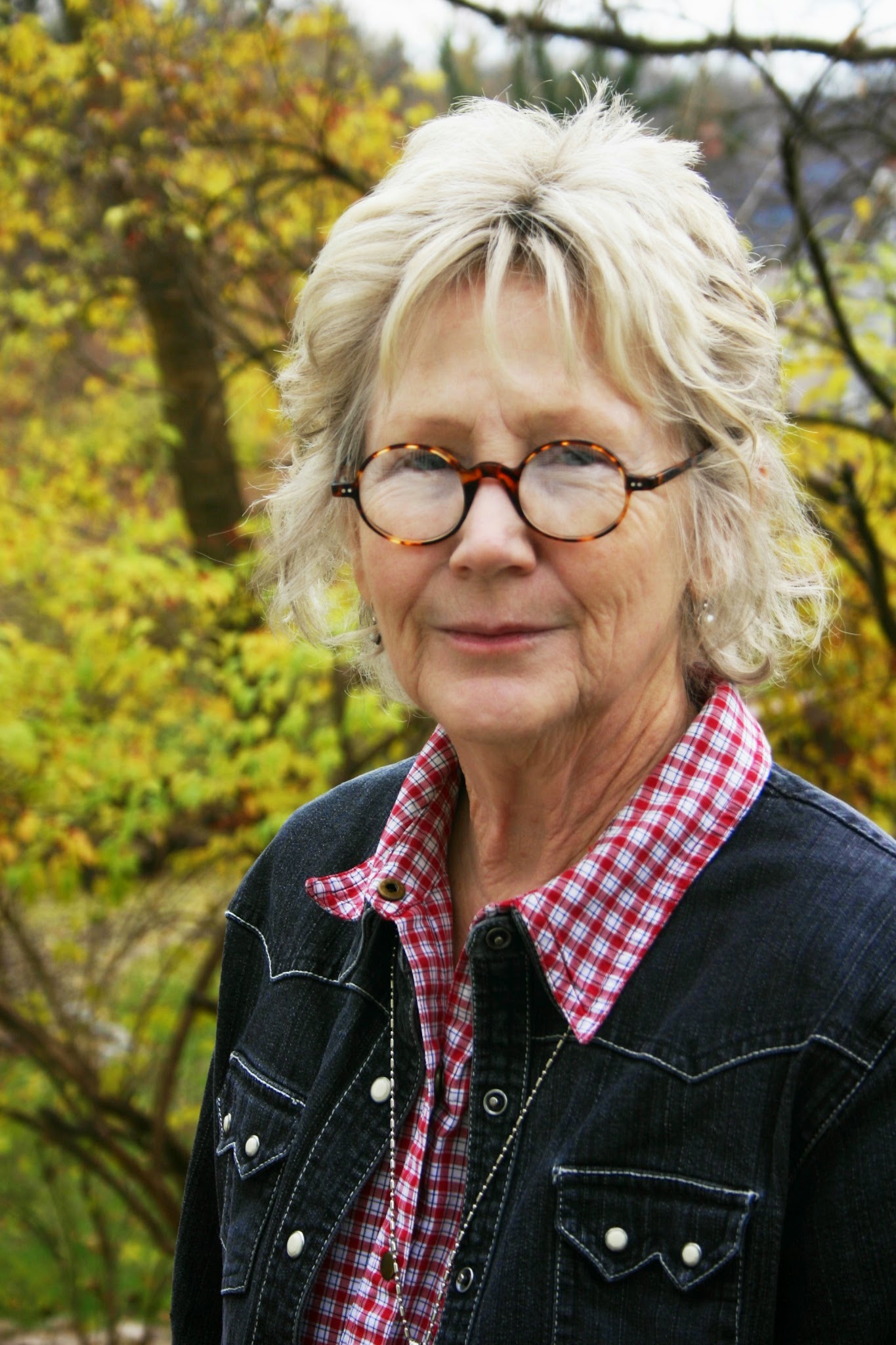
By Bonnie Stanard

There's a quotation for almost any subject. Some of my favorites are from Oscar Wilde and Winston Churchill. If I'm in a bad mood, I open my folder of quotations and get a laugh while sorting out issues such as Why am I in a bad mood?


I've taken the first half of a W. Somerset Maugham quotation as the title for a presentation I've been working on for the Shepherd's Center in Lexington—"Three Rules of Writing." The audience won't know it, but I'd never attend a presentation with that title (unless I'm giving it...) What's wrong? you may ask. Maybe I'm getting cynical, but writing rules are for seventh graders. A person needs guidance learning the basics, but guidance is not the same as rules. If you don't know what point-of-view (POV) means, you need to read advice. But don't listen to rules. Rules are made by "experts" expecting to aggrandize their reputation.


What writer would say there are exactly three rules? Why not 10? If you browse the internet, you can find a hundred. I'm tempted to ask the audience what they think the three rules are, but they aren't writers. If a writer should show up, I can only hope they will stay long enough to get the second half of Maugham's quotation, which will restore my credibility, as it does for Maugham.


Whether or not they are amusing, quotations provoke us to think. They put glitter on language and show it in its best dress. Here are versions of quotations that I've taken from my folder. Some have been altered to make them applicable to either writing or life or the writing life.


  • Over prepare, then go with the flow.

  • No matter how you feel, get up, dress up, and show up.

  • If a relationship has to be a secret, you should be in it.

  • Be eccentric now. Don't wait to wear purple.

  • However good or bad a situation is, make it better or worse.

  • The most important sex organ is the brain.

  • When in doubt, just take the next small step.

  • Cry with one or your characters. It's more healing than crying alone.

  • Everything can change in the blink of an eye. Try to see it does.

  • It's OK to get angry with God. He can take it.

  • All that matters in the end is that you love your story.


The Shepherd's Center is an organization run by volunteers that provides mental and physical activities for the 55-and-older residents of the Lexington area.


Sunday, June 3, 2012

Quotations on Writing


By Bonnie Stanard
I was skimming though Kim Byer’s website (http://www.paperapron.com) and read about her fascination with quotes. I love quotes too. Two often quoted writers I admire are Winston Churchill and Will Rogers. Who do you think is the most quoted writer of English? (Hint, Ralph Fiennes just made a movie based on one of his plays.) What is the most quoted book? (Hint, it was originally written in Hebrew and Greek.)

My favorite quote about writing is “Easy reading is damned hard writing.” (Nathaniel Hawthorne) It has taken a while, but I now understand what professional writers have been telling me for years. Getting a story written is the first step, a beginning. And if you’re like me, the first draft is less than a fourth of the effort you’ll make to get to what you think is a finished product.

I love this quote from Mark Twain, “Get your facts first, and then you can distort them as much as you please.” In other words, as a first step, get to know your story’s background backward and forward. This goes to authenticity, or securing the reader’s trust. If we get the foundation right, we can convince the reader to believe in us as tellers of the truth. Then we can lie and they will suspend disbelief.

“In this art form, in any art form, generalities are useless.” (Zubin Mehta). This brings to mind a comment you’ve probably heard, and maybe it’s in some book of quotes: a million deaths is a statistic but the death of one person is a tragedy. This may be one reason it’s often said that historians don’t make good writers of historical fiction. Most of them know and are interested in the big picture, the grand designs of history that impact the past and the present. But the heart responds to the individual, regardless of the movements sweeping them along in history.

I get a kick out of this quote by W Somerset Maugham: “There are three rules for writing the novel. Unfortunately, no one knows what they are.” Agents, editors, and publishers enhance their livelihoods telling writers and prospective writers the rules of the business. In the end, books are published every day that defy all the rules. I’m reading Pulitzer Prize winning author Cormac McCarthy’s novel, Blood Meridian, and I can report that it conforms to almost none of the rules of writing…weak character development, scattershot plot, unconventional punctuation.

This often quoted advice by E.L. Doctorow to writers is worth repeating: “Writing a novel is like driving a car at night. You can see only as far as your headlights, but you can make the whole trip that way.” Some writers prepare an outline of the entire story before beginning, but that’s something I can’t or won’t do. There’s another quote that says that we write to find out what we think. In fiction, I write to find out what my characters think. I write to find out what they will do next.

Finally, from an anonymous writer—“If you wait for inspiration, you’re not a writer, you’re a waiter.” This may be true, but some of us have periods when we’re “waiters.” I like to think I’m gathering energy for the next writing storm.